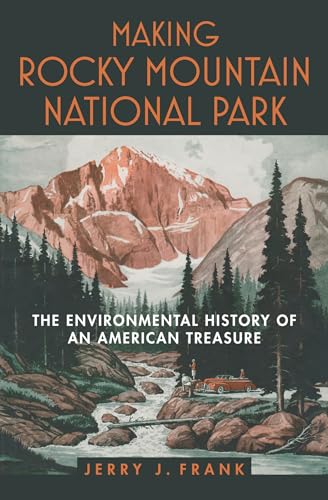
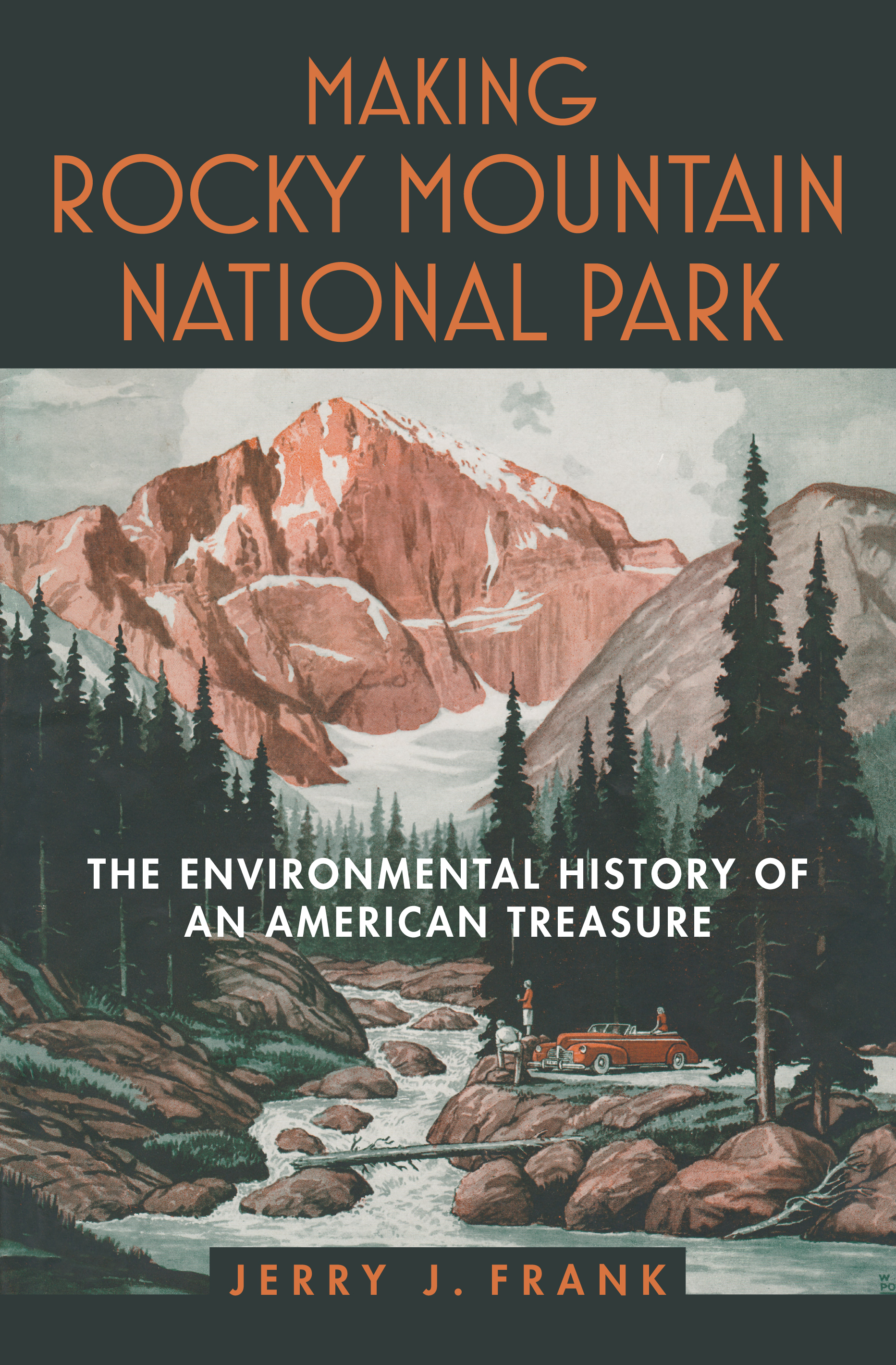
Making Rocky Mountain National Park : the environmental history of an American treasure / Jerry J. Frank.
Material type: TextPublisher: Lawrence, Kansas : University Press of Kansas, 2013Publisher: [Place of publication not identified] : [Publisher not identified], 2013Description: 253pages 24cmContent type:
 - text
- unmediated
- volume
- General
- 9780700619320 (hardback)
- Rocky Mountain National Park (Colo.) -- History
- Tourism -- Environmental aspects -- Colorado -- Rocky Mountain National Park
- Nature -- Effect of human beings on -- Colorado -- Rocky Mountain National Park
- HISTORY / United States / State & Local / West (AK, CA, CO, HI, ID, MT, NV, UT, WY)
- NATURE / Environmental Conservation & Protection
- NATURE / Ecosystems & Habitats / Mountains
- 978.8/69 23
- F782.R59 F73 2013
- HIS036140 | NAT011000 | NAT041000
| Item type | Current library | Collection | Call number | Status | Barcode | |
|---|---|---|---|---|---|---|
 Books
Books
|
Idaho Springs Public Library | ANF | 978.8 FRA (Browse shelf(Opens below)) | Available | 30404100085651 |
Machine generated contents note: -- List of Illustrations -- Preface and Acknowledgments -- Introduction -- 1. Making a National Park -- 2. A Vast Moving Caravan -- 3. Happy Trails -- 4. "Our Friends the Trees" -- 5. Growing Elk -- 6. Fishing for Tourists -- 7. Slippery Slopes -- Conclusion -- Notes -- Selected Bibliography -- Index.
"On September 4, 1915, hundreds of people gathered in Estes Park, Colorado, to celebrate the creation of Rocky Mountain National Park. This new nature preserve held the promise of peace, solitude, and rapture that many city dwellers craved. As Jerry Frank demonstrates, however, the park is much more than a lovely place. Rocky Mountain National Park was a keystone in broader efforts to create the National Park Service, and its history tells us a great deal about Colorado, tourism, and ecology in the American West. To Frank, the tensions between tourism and ecology have played out across a natural stage that is anything but passive. At nearly every turn the National Park Service found itself face-to-face with an environment that was difficult to anticipate--and impossible to control. Frank first takes readers back to the late nineteenth century, when Colorado boosters--already touting the Rocky Mountains' restorative power for lung patients--set out to attract more tourists and generate revenue for the state. He then describes how an ecological perspective came to Rocky in fits and starts, offering a new way of imagining the park that did not sit comfortably with an entrenched management paradigm devoted to visitor recreation and comfort. Frank examines a wide range of popular activities including driving, hiking, skiing, fishing, and wildlife viewing to consider how they have impacted the park's flora and fauna, often leaving widespread transformation in their wake. He subjects the decisions of park officials to close but evenhanded scrutiny, showing how in their zeal to return the park to what they understood as its natural state, they have tinkered with its features--sometimes with less than desirable results. Today's Rocky Mountain National Park serves both competing visions, maintaining accessible roads and vistas for the convenience of tourists while guarding its backcountry to preserve ecological values. As the park prepares to celebrate its
"Challenging the view that national parks are sanctuaries separate from human-built society, Frank's environmental history of Colorado's iconic Rocky Mountain National Park reveals how nature was constructed to accommodate consumerism yet still plays an unplanned role in visitors' experiences. The reader learns not only what changes were made but also why they occurred, with much of the park's history understandable as a contest between tourism and ecology vying to impose their competing models"-- Provided by publisher.
centennial, Frank's book advances our understanding of its past while also providing an important touchstone for addressing its problems in the present and future"-- Provided by publisher.
There are no comments on this title.